Is that data recovery lab actually near you? Five checks before your drive leaves your hands
Search for data recovery in any UK city and the results look wonderfully convenient: labs in your town, labs two streets away, labs everywhere. Dozens of them, all apparently local.
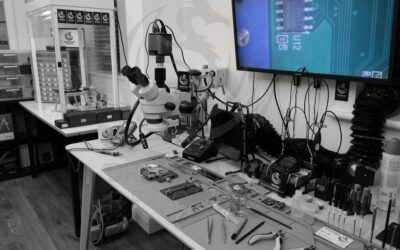
Most of them aren’t. Genuine data recovery laboratories — rooms with imaging hardware, donor-part libraries, microscopes and engineers — are rare, and they don’t exist in every city. What exists in every city is addresses. This article is about telling the two apart, with five checks anyone can run in ten minutes, before a drive goes anywhere.
1. Put the address into Street View
Take the street address from the website and look at the actual building. A recovery lab looks like a workplace — an industrial unit, an office with one name on it.
What you’ll often find instead is a serviced-office block or a co-working space: a smart lobby, a brand wall, and the same suite number shared by dozens of companies that have never set foot in the building. There’s nothing wrong with serviced offices — but nobody is opening hard drives in one. If the “lab” address turns out to be a mailbox with a marble entrance, you’ve learned where your drive is NOT going.
2. Count the locations
If one company lists ten, twenty, thirty “locations” across the UK, pause and do the arithmetic. A real lab needs equipment that costs more than a car, engineers who take years to train, and a steady supply of donor drives. Nobody builds thirty of those.
Multiple locations almost always means one actual facility — sometimes not in this country — plus a network of drop-off points and couriers. Which is fine, as long as you’re told. The tell is a company that runs one lab and presents it as thirty local ones.
3. Ask where the work physically happens
One question, asked in writing: “Which building will my drive be in when it’s opened, and can I visit it?” A real lab answers with a street address and a yes, without hesitation, because it’s just a fact about how they work.
Evasion has a sound to it: “we have secure facilities nationwide”, “your local branch handles everything”, “collection is free so there’s no need to visit”. None of those are answers. If you can’t be told where your drive will physically be, everything else on the website is decoration.
4. Read the reviews for journeys
Skip the five-star averages and read the text of the reviews — especially the middling ones. You’re looking for geography: reviewers mentioning that their drive was “sent to the main lab”, “couriered down south”, or took a detour nobody mentioned at the start.
Customers tell you where their drives actually went. It’s the most reliable map of a recovery company you’ll ever get, and it’s free.
5. Treat “free local collection” as what it is: a courier
Free daily collection from your area sounds like proof that a company is local. Read it again — it proves the opposite. If a van collects your drive, your drive is travelling to wherever the work really happens; the collection exists because the lab isn’t near you.
There’s nothing wrong with a drive travelling — ours arrive by post from all over the UK. The difference is honesty about the journey: a tracked parcel you send to a named building, versus a free van ride to an address you were never given.
Here’s the part the “local” theatre misses
Once a drive is packed in a box, distance stops mattering. Royal Mail Special Delivery Guaranteed moves a drive from any UK postcode to our bench overnight, tracked and signed for both ways. The recovery itself is identical whether the customer lives ten minutes away or four hundred miles away: same lab, same imaging hardware, same engineer.
So the question was never “who is nearest?” — it’s “where is the real lab, who works there, and what does it cost?” A letterbox two streets away is further from your data than a real laboratory three counties away.
Where we actually are — on the record
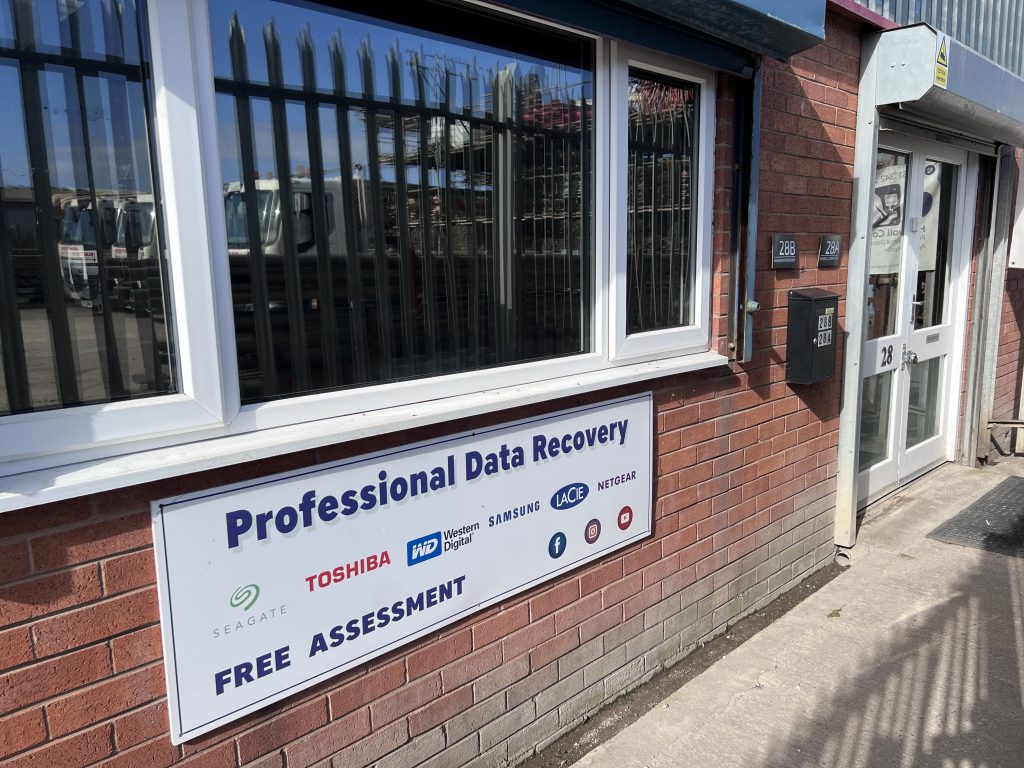
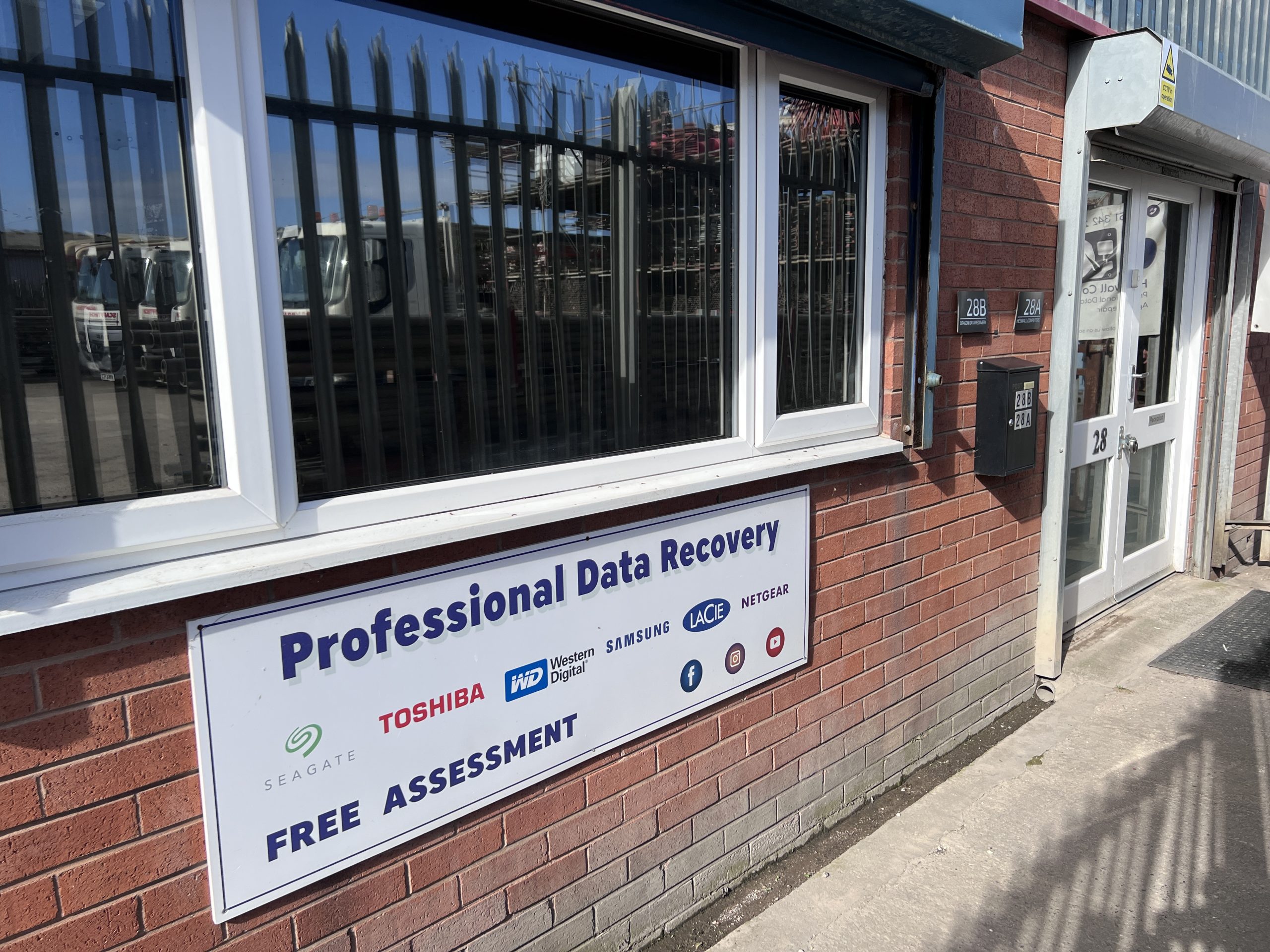
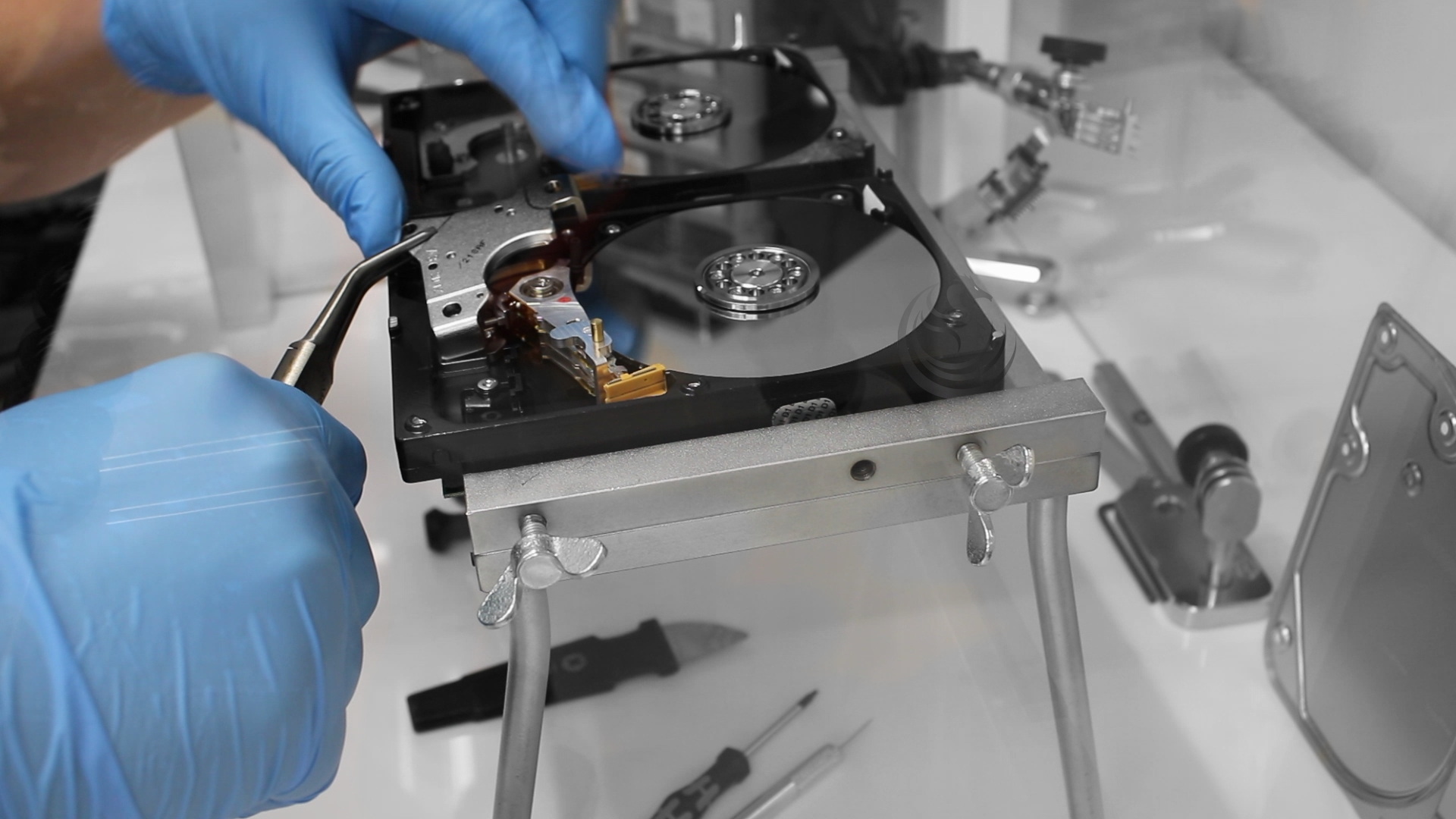
One building: 28b Tarran Way West, Tarran Industrial Estate, Moreton, Wirral. Every drive we recover is received, assessed and recovered there, and anyone is welcome to visit it by appointment and watch their drive booked in.
We serve the whole UK from that one lab, by post and arranged collection — and we say so, plainly, on every page of this site. Our London page tells London customers in the opening lines that the lab is on the Wirral and the post is overnight. No invented branches, no city-centre letterboxes, no theatre. Our prices are published the same way — from £350 including VAT, no data, no fee — because the same honesty should apply to the bill.
The ten-minute rule
Before any drive leaves your hands, spend ten minutes on the five checks above — and if you haven’t yet, read our seven questions to ask before your drive leaves your hands. Companies that pass these checks are easy to spot, because they volunteer the answers before you ask.
Ours are volunteered above. If you’d like a price on your drive — wherever you are in the UK — start a free estimate here. It takes about a minute, and you’ll get a reference number straight away.