
How to choose a data recovery company: 7 questions to ask before your drive leaves your hands
When a drive fails, you are suddenly shopping for something you never wanted to buy, in a hurry, with something irreplaceable at stake. That combination makes data recovery one of the easiest services in the world to sell badly — and the industry knows it.
The good news is that you don’t need to understand hard drives to protect yourself. You just need to ask the right questions before your drive leaves your hands. Here are the seven we would ask, and why each one matters.
1. Can I visit the lab?
Not “do you have a local office” — can you, personally, walk through the door of the building where the work is done and watch your drive being booked in?
Plenty of recovery websites list addresses in every major city. Look closer and many of those addresses are serviced offices, partner shops or drop-off counters: your drive is collected there, boxed up, and couriered to a central facility that might be hundreds of miles away — sometimes in a different country. A local phone number proves nothing either; numbers are rented by the city.
A real lab will say yes to a visit without hesitation. If the answer involves your drive being “sent to our main facility”, you were never dealing with a local lab — just a local letterbox.
2. Who actually does the work?
Ask for the name of the engineer who will open your drive. It sounds like an odd question, but it’s one of the most revealing.
At a genuine lab, there’s a straightforward answer, because the person quoting you is either the engineer or sits a few feet from them. At a sales-floor operation, there isn’t — your contact is an account manager reading from a screen, and the actual work happens somewhere you’ll never see, done by someone you’ll never speak to. Some firms don’t do the work in-house at all and quietly outsource it.
Your data is the most personal thing you own. You’re entitled to know whose bench it will sit on.
3. Will they give you a price range BEFORE they have your drive?
This is the big one, and it’s where the industry earns its reputation.
Honest answer first: nobody can give you an exact final price before assessing a drive, because nobody knows how badly it has failed until it’s examined properly. But a competent lab absolutely can tell you the realistic price band for your type of fault before you send anything — because they’ve done thousands of them.
So ask. If the answer is a confident range in pounds, good. If the answer is “it depends, send it in for a free diagnostic and we’ll quote you” — and nothing you ask will shake a number loose — be careful. Once your drive is in their custody, you’re negotiating from a much weaker position, and the quote that finally arrives has a habit of being a shock. Which brings us to…
4. What does the “free diagnostic” actually cost?
Nothing in business is free. A free diagnostic is a customer-acquisition cost, and it has to be recovered somewhere — in the recovery price.
The model works like this: the free assessment gets your drive into the building. Then comes the quote — and because your drive is already there, because you’re anxious, and because sending it somewhere else feels like starting again from zero, a surprising number of people accept a price they’d never have agreed to on day one.
A free diagnostic isn’t automatically a scam — plenty of decent labs offer one, and so do we. The difference worth probing is whether the company will talk real numbers before the drive arrives, or whether “free” is the only number you get until they’re holding your data.
5. What happens if I say no?
Ask, specifically: “If I decline the quote, what do I get back, in what condition, and what does it cost me?”
The answers vary more than you’d think. Some firms charge a fee to return your own drive. Some return drives disassembled — in pieces, in a bag — making a second opinion somewhere else harder and more expensive. Read reviews of any recovery firm and look for what happened to the people who said no; it tells you more than a hundred five-star recoveries.
The answer you want is simple: your drive comes back to you put back together, at no charge, no quibble. Anything else is a hostage arrangement.
6. What can they NOT do?
This question sounds backwards, but it’s the fastest honesty test in the industry.
Every real lab has limits. Certain drive families need tooling that only a handful of facilities in the world own. Some modern devices solder the storage to the main board. Some failures are genuinely unrecoverable. An engineer who works on drives every day knows exactly where their limits are — and a trustworthy one will tell you without being embarrassed about it.
So ask what they don’t take on. If the answer is “we recover everything, 99% success rate” — nobody recovers everything, and a success figure with no published method behind it is a marketing number, not an engineering one. The companies that admit their limits are, reliably, the ones telling the truth about everything else too.
7. Where does my drive physically go?
Last one, and it ties the rest together: from the moment it leaves your hands, where exactly is your drive?
Ask which building the work happens in, whether the drive ever leaves that building, and who else handles it along the way. Every extra journey is an extra courier, an extra set of hands, an extra thing to go wrong — and if your data is sensitive, an extra place it exists. “We have locations nationwide” is not an answer to this question. A street address where the work is done, is.
How we answer these questions
It would be a strange article if we ducked our own test, so here are our answers, on the record.
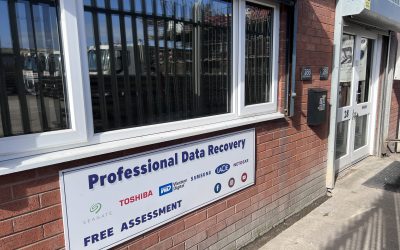
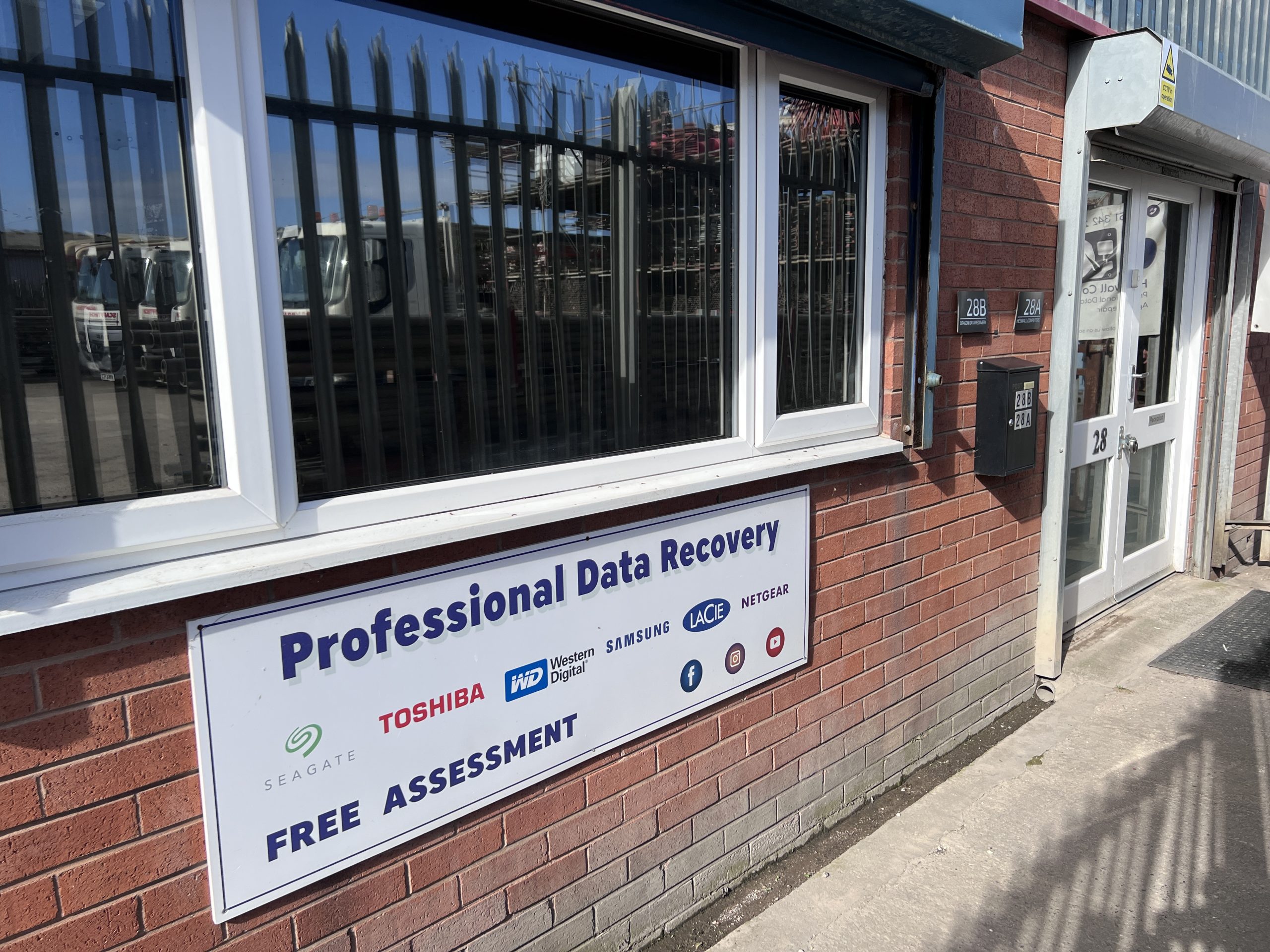
You can visit the lab. We’re at 28b Tarran Way West, Tarran Industrial Estate, Moreton, Wirral — one building, where every drive is received, assessed and recovered. Drop off by appointment and you can watch your drive booked in.
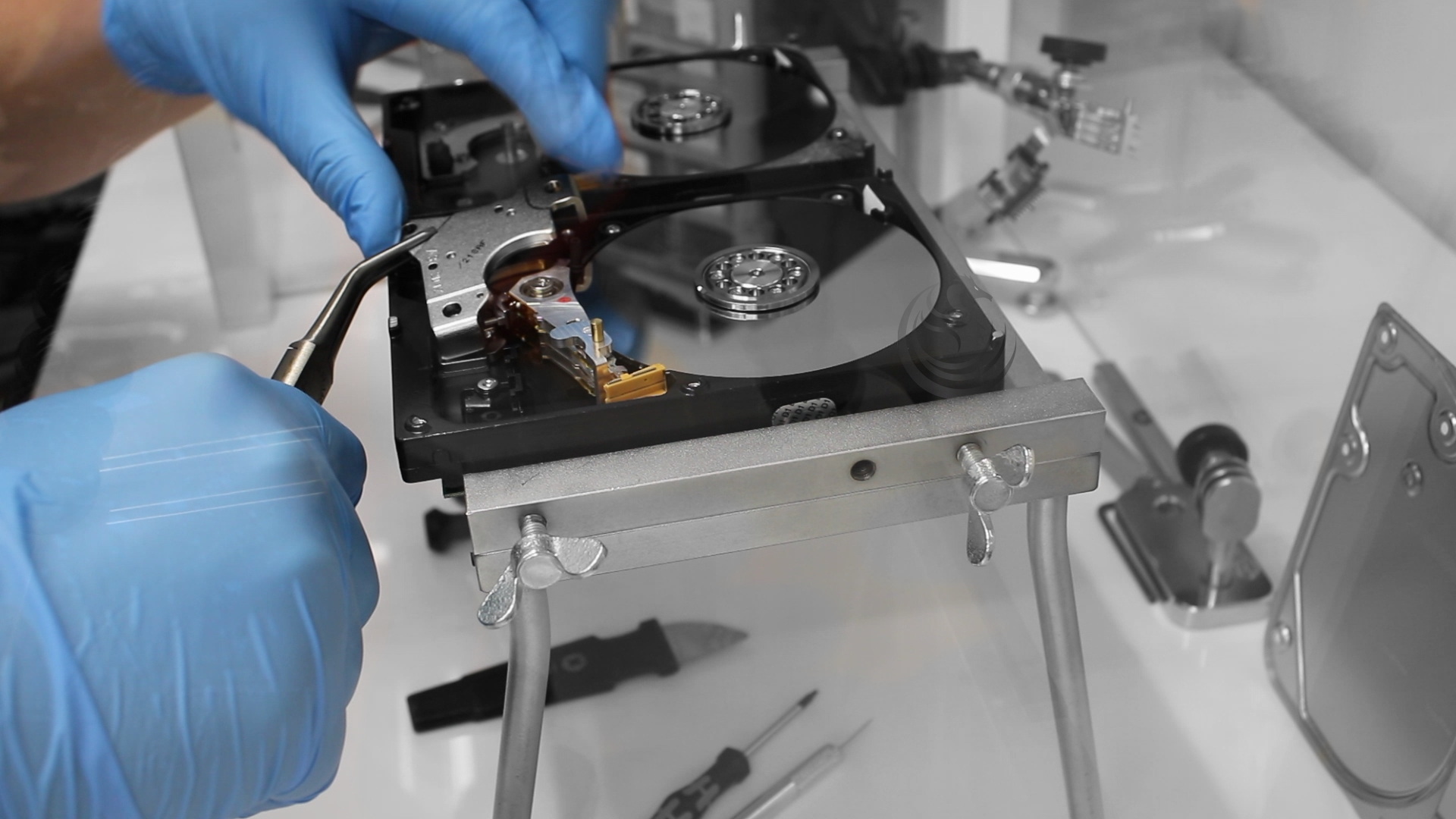
The person you deal with is the engineer. There’s no sales floor and no call centre; the person reading your enquiry is the person who’ll have your drive on the bench.
Our prices are published. Recoveries start from £350 inc VAT for logical faults and £450 inc VAT for mechanical faults, with RAID and NAS work quoted as a band up front. Those numbers are on our prices page for anyone to read before we’ve ever seen your drive.
No data, no fee — unconditionally. If we can’t recover your data, you pay nothing.
If you decline a quote, your drive comes back reassembled, at no charge. No return fee, no bag of parts, no hard feelings — and nothing stopping you getting a second opinion.
We publish our limits. We can’t do internal work on helium-filled drives — that’s our line on those — and we don’t take on soldered-storage Macs or ransomware cases. We say so on the site, because we’d rather turn work away than pretend.
Your drive never leaves our building. It isn’t couriered to a “main facility”, because this is the main facility.
One last piece of advice
Whoever you choose — us or anyone else — ask these seven questions first, in writing if you can. A good lab will answer all seven quickly and plainly, because the answers are just facts about how they work. Evasion on any of them is itself an answer.
And if your drive has already failed: power it down and leave it down. Every restart of a failing drive risks making the recovery harder.
If you’d like our answer on your drive, start a free estimate here — it takes about a minute, and you’ll get a reference number straight away.