Data Recovery for Exeter

Hard drive, SSD, RAID and NAS data recovery for Exeter and East Devon — carried out at our own laboratory, by the engineers you deal with, on a no data, no fee basis.
From Exeter, every specialist service is a journey away — so the only question worth asking is which laboratory the drive is travelling to. Dragon Data Recovery is an independent laboratory, not a shopfront or a courier address. Drives reach us from Exeter, Exmouth, Topsham, Crediton and Honiton by Royal Mail Special Delivery Guaranteed or UPS collection from your door. Prices from £350 including VAT, a firm quote before any chargeable work, and if we can’t recover meaningful data there’s nothing to pay.
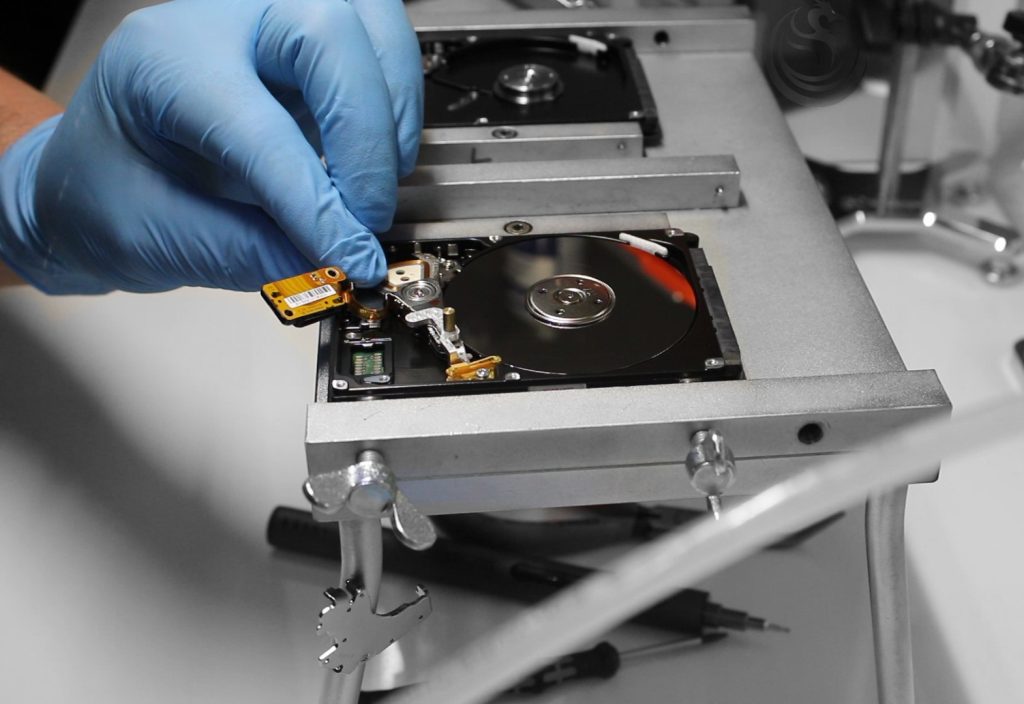
Your drive stays in our lab
Every recovery happens here — at our own lab on the Wirral, on our own benches, by our own engineers.
And when you want to know how your case is going, you get answers from the people actually doing the work, not a call centre script.
Rated 5.0 from 58 Google reviews.
How it works from Exeter
1. Start your case — Complete the recovery assessment form with what’s happened and what the drive is doing. We review every case properly before replying — you’ll get the likely pricing tier and clear next steps, with no obligation.
2. Send us your drive — We recommend Royal Mail Special Delivery Guaranteed: book it online, then hand it in at any Post Office branch (take the QR code and they’ll print the label for you), or book Parcel Collect and your postie picks it up from your door. It’s tracked, signed for and priority-handled all the way to the lab. Prefer a courier? We can arrange UPS door-to-door collection for £14.95 from UK mainland addresses — Exeter included. Pack the drive in a box with plenty of bubble wrap — not a padded envelope.
3. Approve, recover, return — We assess the drive, confirm a firm quote, and only proceed once you approve it. Recovered data is returned on new media by tracked courier. If we can’t recover meaningful data, there’s no recovery fee.
Hard drive recovery for Exeter
Most of what reaches us from Exeter is a single drive that has stopped behaving: an external hard drive that clicks or beeps when it’s plugged in, a laptop that won’t boot, a desktop drive that has vanished from the computer, or a Mac showing a folder with a question mark. These are mechanical and electronic failures, and the mistake that costs people their data is keeping the drive powered up and trying things — recovery software, a different cable, another USB port, “one more go”. A drive with a failing head or a damaged platter does more harm to itself every minute it spins. Power it off, leave it off, and let the lab image it properly on hardware built for the job. If a drive asks to be formatted, says it’s RAW, or reports that files are corrupted, the answer is always no — that’s a logical fault we recover from routinely, as long as nothing has been written over the top.
RAID, NAS and server recovery for Exeter businesses
The business side of our Exeter work is where the stakes run highest: the failed RAID arrays, NAS boxes and small servers that bring in the urgent cases — a Synology or QNAP that’s dropped a disk and then another, a RAID 5 that won’t rebuild, a server volume that’s suddenly unreadable. Legal and professional practices around the cathedral quarter, research groups and spin-outs attached to the university, public-sector offices and the farm and estate businesses of the surrounding county all store their work the same way, and when it fails the rule is the same: power the system down and leave it down. Rebuilding, re-initialising or swapping disks in a degraded array is the single most common way data is destroyed before it reaches us. Multi-drive systems come to the lab as a complete set, every disk is imaged first, and the array is reconstructed from the images, so the originals are never put at further risk. IT firms and computer shops across Devon send us their own customers’ failed drives for exactly this reason; as a Exeter business you can simply deal with the lab directly.
A real laboratory for Exeter and East Devon — by design, not accident
Devon is used to doing things by post, and data recovery is no exception. Special Delivery from an Exeter Post Office costs what it costs anywhere else in the country and is normally signed for at the lab the next working day; from there the process is identical to a drive handed over the counter. We work for people and businesses in Exeter, Exmouth, Topsham, Crediton, Honiton and Tiverton, on anything from one portable drive full of family photographs to the storage behind an East Devon office network. We also cover Plymouth and Weymouth. See our dedicated pages for external hard drive recovery, NAS data recovery and RAID data recovery, or get in touch and we’ll identify what you’re dealing with.
Data recovery in Exeter — common questions
How do I get my drive to you from Exeter?
Most Exeter customers send by Royal Mail Special Delivery Guaranteed — book it online, then either hand it in at a Post Office branch (take the QR code and they’ll print the label for you) or book Royal Mail’s Parcel Collect and your postie picks it up from your door. Worth knowing: Royal Mail only accept Special Delivery items at Post Office branches and their own Customer Service Points — not parcel shops, lockers or postboxes. Prefer a courier? We can arrange UPS door-to-door collection for £14.95 from UK mainland addresses — the Exeter area is covered. And if you’re ever passing the North West, you’re welcome to drop off in person by appointment.
Is it safe to post a failed hard drive from Exeter?
Yes — failed drives travel well when packed properly. Use a rigid box with plenty of bubble wrap around the drive (never just a padded envelope), and send it by Royal Mail Special Delivery Guaranteed — Royal Mail’s premium service and the one we recommend: fully tracked, signed for on delivery, and treated with priority handling end to end. Drives arrive with us from all over the UK this way every week, including from other data recovery companies. If your drive has been dropped or is making unusual noises, don’t power it up again to test it — pack it as it is.
My external hard drive is clicking or beeping — what should I do?
Unplug it and leave it unplugged. Clicking usually means the read/write heads are failing; beeping on a portable drive usually means the motor can’t spin the platters. Both are mechanical faults, and every power-up risks scoring the platters and taking the data with them. Don’t open it, don’t freeze it, and don’t run recovery software — start the recovery assessment form and post the drive to the lab as it is.
Is there a data recovery lab in Exeter itself?
There are firms in and around Exeter that advertise data recovery, and for a deleted file or a simple fault some will manage. What’s worth establishing before you hand a drive over is whether mechanical and multi-disk work is done on site or passed to a laboratory elsewhere. Dragon is the laboratory: clean-air bench work, imaging and array rebuilds are all done in-house, and you speak to the people doing them. Ask any provider where the drive physically goes and who does the work; a real lab will tell you straight away.
My RAID or NAS has failed — can you handle multi-drive systems?
Yes — RAID and NAS recovery is a core specialism of the lab. Power the system down, leave it down, and start with the recovery assessment form; rebuilding or re-initialising a degraded array is the most common way data gets destroyed before it reaches us. We need the complete set of disks, not just the one that’s showing a fault.
How long does the round trip take from Exeter?
Shipping adds a day each way at most. Every case then moves through the same three stages: assessment, a firm quote for your approval, then the recovery itself. Straightforward cases are often completed within days of approval, while mechanical failures can take longer — particularly where matching donor parts have to be sourced. If your case is time-critical, say so on the recovery assessment form — urgent cases can be prioritised.
What does data recovery cost from Exeter?
The same as it does anywhere else we serve — there’s no charge for distance. Logical recoveries start from £350 and mechanical recoveries from £450, both including VAT; larger drives and RAID, NAS and complex cases are quoted individually once the drive has been assessed. You’ll always receive a firm quote for approval before any chargeable work begins — and if we can’t recover meaningful data, there’s no recovery fee, so a drive posted from Exeter risks only the postage.
Lost data? Let’s get it back.
Tell us what happened — we’ll reply with honest next steps and clear pricing, no obligation.
Start your recovery